
Professional drug monograph | Last reviewed: 21 September 2026
Indications and clinical role
The cited official label indicates IV calcium gluconate for acute symptomatic hypocalcaemia in adults and paediatric patients. Other emergency uses may exist in specialty guidelines, but protocols and dosing can differ; this monograph does not extend the label indication.
Strengths and marketed formulations
- Official label: 100 mg calcium gluconate/mL, providing 9.3 mg (0.465 mEq) elemental calcium/mL; 10, 50 and 100 mL presentations are listed.
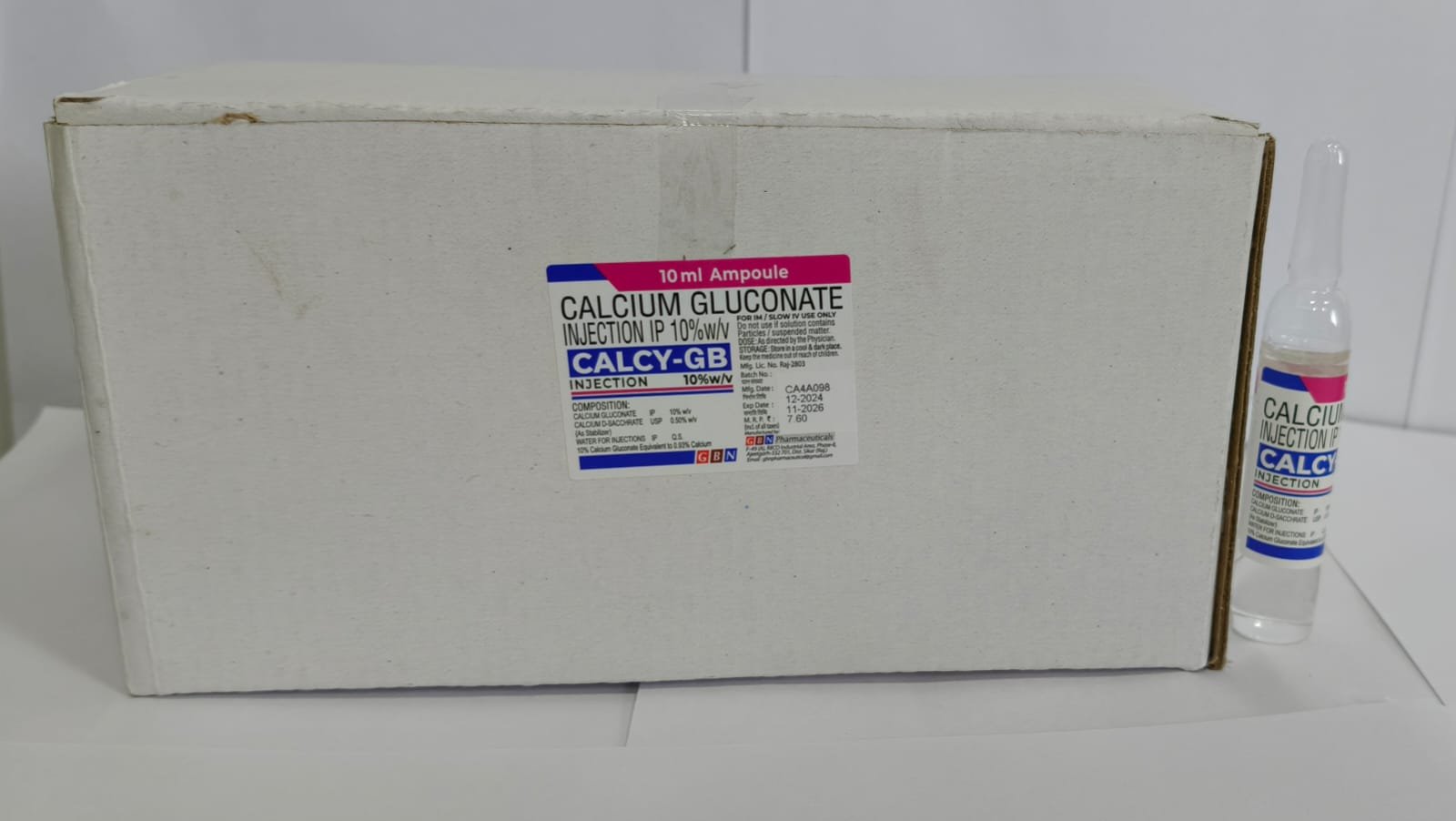
- India-market example shown: Calcium Gluconate Injection IP 10% w/v, 10 mL ampoule (1,000 mg/10 mL).
Verified dosing for acute symptomatic hypocalcaemia
| Population | Initial IV dose (calcium gluconate) | If required / continuous infusion |
|---|---|---|
| Neonate ≤1 month | 100–200 mg/kg | 100–200 mg/kg every 6 h; infusion start 17–33 mg/kg/h |
| Child >1 month to <17 years | 29–60 mg/kg | 29–60 mg/kg every 6 h; infusion start 8–13 mg/kg/h |
| Adult | 1,000–2,000 mg | 1,000–2,000 mg every 6 h; infusion start 5.4–21.5 mg/kg/h |
Individualize within the range to symptoms, calcium level and acuity. For intermittent treatment, the label recommends serum calcium every 4–6 hours; during continuous infusion, every 1–4 hours.
Educational calculation example
A 20 kg child prescribed 30 mg/kg requires 20 × 30 = 600 mg calcium gluconate. At 100 mg/mL, volume = 600 ÷ 100 = 6 mL. This equals about 55.8 mg elemental calcium; the calculation must not be applied to a different concentration.
Reconstitution, dilution and preparation
- It is supplied as a solution; no reconstitution is required for the cited presentation.
- Dilute bolus doses in 5% dextrose or 0.9% sodium chloride to 10–50 mg/mL.
- For continuous infusion, dilute to 5.8–10 mg/mL.
- Inspect for particles/discolouration and use the diluted solution immediately after preparation.
Route, administration and rate
IV only through a secure line. Do not exceed 200 mg/min in adults or 100 mg/min in paediatric patients, including neonates. Monitor vital signs and ECG during administration.
Storage, stability and compatibility
Follow the actual pack’s storage instructions. The cited label says to use diluted solution immediately. Do not mix with bicarbonate- or phosphate-containing fluids, minocycline injection, or ceftriaxone. Ceftriaxone and IV calcium must never run simultaneously through a Y-site; concurrent use is contraindicated in neonates ≤28 days.
Renal and hepatic considerations
In renal impairment, start at the lowest end of the range and monitor calcium every 4 hours. The label provides no specific hepatic dose adjustment; clinical monitoring remains necessary.
Pregnancy and lactation
Use only when clinically indicated after benefit–risk assessment. Consult the current product label for the available pregnancy and lactation data; avoid assuming that physiological need makes rapid IV administration risk-free.
Contraindications and major interactions
- Hypercalcaemia.
- Neonates ≤28 days receiving ceftriaxone.
- Avoid cardiac glycoside coadministration where possible; if unavoidable, give slowly in small amounts with close ECG monitoring.
- Calcium may reduce response to calcium-channel blockers; vitamin D, thiazides and other hypercalcaemia-promoting drugs can increase risk.
Monitoring
Symptoms, ionised/adjusted serum calcium, ECG and heart rate, blood pressure, IV site and renal function. Continuous infusions need frequent calcium checks.
Adverse effects
Common/recognized: vasodilation, hypotension, bradycardia and local inflammation. Serious: arrhythmia, syncope/cardiac arrest with rapid administration, extravasation-related calcinosis, ulceration and tissue necrosis, and calcium–ceftriaxone precipitation.
India availability caveat
Brands, excipients, container sizes and labelling vary. The pictured product establishes a representative marketed presentation, not nationwide stock or regulatory status at every facility.
What is known, and what is uncertain
Known: concentration, label indication, dose ranges, dilution, rates and incompatibilities above are taken from the cited official label. Uncertain: local formulary availability, non-label emergency indications and compatibility with products not listed require current institutional references.
Official and product sources
- DailyMed/FDA label — Calcium Gluconate Injection (updated 18 May 2026)
- GBN Pharmaceuticals — CALEY-GB 10% w/v, 10 mL product page and image
Related reading
Drug Doses & Preparation A–Z · Adrenaline injection guide