
- IV paracetamol is used when rapid analgesia/antipyresis is needed or oral dosing is unsuitable.
- Count paracetamol from every route and combination product toward the daily maximum.
- The commonly referenced IV concentration is 10 mg/mL; infuse over 15 minutes and verify the actual Indian product label.
Clinical role: Intravenous paracetamol (acetaminophen) is indicated for mild-to-moderate pain, as an adjunct to opioids for moderate-to-severe pain, and for fever when an IV route is clinically appropriate. It is not a substitute for diagnosing the cause of pain or fever.
Adult and paediatric dosing
| Patient | Verified label dose | Maximum |
|---|---|---|
| Adults/adolescents ≥50 kg | 1,000 mg every 6 hours or 650 mg every 4 hours | 4,000 mg/day from all paracetamol sources |
| Adults/adolescents <50 kg | 15 mg/kg every 6 hours or 12.5 mg/kg every 4 hours | 15 mg/kg/dose; 75 mg/kg/day |
| Children 2–12 years | 15 mg/kg every 6 hours or 12.5 mg/kg every 4 hours | 15 mg/kg/dose; 75 mg/kg/day |
| Infants 29 days–2 years | 15 mg/kg every 6 hours | 60 mg/kg/day |
| Neonates ≥32 weeks gestational age to 28 days | 12.5 mg/kg every 6 hours | 50 mg/kg/day |
Important: These are label-based educational doses. Prematurity, malnutrition, dehydration, liver disease, renal impairment, concomitant products and local neonatal protocols can require a lower dose or longer interval.
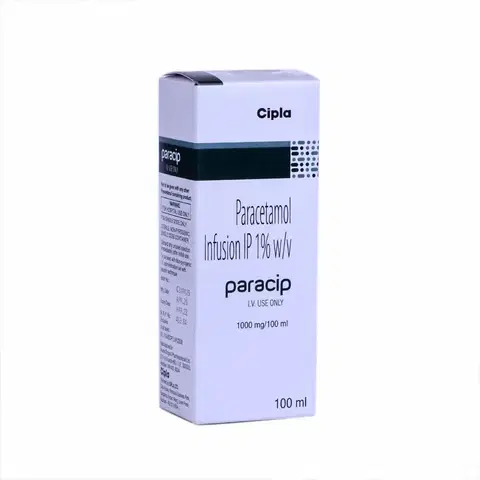
Formulations and India availability
International labels commonly describe a single-dose 10 mg/mL solution in 100 mL containers (1,000 mg/100 mL); smaller paediatric presentations may also exist. Indian brands, pack sizes and excipients vary. Availability is not proof of equivalence—verify CDSCO-approved/local product information, concentration and hospital formulary before use.
Educational calculation example
An 18 kg child prescribed 15 mg/kg requires 270 mg. At 10 mg/mL, volume = 270 ÷ 10 = 27 mL. Transfer the exact dose aseptically to an appropriate sterile container/syringe pump and administer over 15 minutes according to the label and local policy. This example is not a patient-specific prescription.
Preparation, route and administration
- Route: intravenous infusion only; administer over 15 minutes.
- For doses below 1,000 mg, withdraw the calculated dose from the single-dose container into a separate sterile container. For paediatric doses up to 60 mL, a syringe pump may be used where permitted by the label/protocol.
- Use aseptic technique, inspect for particles/discolouration and discard unused solution. The referenced label directs use within 6 hours after container entry/transfer.
- Do not add other medicines to the paracetamol solution. Diazepam and chlorpromazine are reported incompatible in the referenced label.
Storage, stability and compatibility
Store exactly as the marketed product label specifies; do not freeze unless the label permits it. Stability after opening or transfer is product-specific. Use a dedicated line or confirm Y-site compatibility through a validated institutional reference.
Renal, hepatic, pregnancy and lactation considerations
- Hepatic: Contraindicated in severe hepatic impairment or severe active liver disease in the referenced label. Use caution and consider a reduced total daily exposure in hepatic disease, chronic alcohol use, malnutrition or dehydration.
- Renal: For severe renal impairment, repeated dosing may need a longer interval and closer monitoring; follow the actual label and local protocol.
- Pregnancy/lactation: Use only when clinically needed after benefit–risk assessment. Paracetamol passes into breast milk in small amounts; verify current product information.
Contraindications, interactions and monitoring
Do not use with hypersensitivity to paracetamol/excipients or severe hepatic impairment/active severe liver disease. Major hazards include duplicate therapy with oral/rectal paracetamol or combination cold/analgesic products, enzyme-inducing drugs, chronic alcohol exposure and warfarin interaction with repeated regular use. Monitor total daily dose, liver-risk factors, clinical response and liver tests when prolonged treatment or toxicity risk exists.
Adverse effects and medication-error warnings
Commonly reported effects include nausea, vomiting, headache and infusion-site discomfort. Serious risks include acute liver failure after overdose, severe skin reactions, anaphylaxis and blood dyscrasias. Confusing mg with mL, adult 100 mL bags with paediatric doses, or failing to count all routes can cause fatal overdose. Always prescribe and document both mg dose and corresponding volume.
What is known—and limitations
The dose, concentration and 15-minute infusion instructions above come from an official regulatory label. Indian products may differ in presentation, excipients, storage and approved age groups. Evidence and labelling are more limited in very premature neonates and in severe hepatic/renal disease; specialist protocols take priority.
Official sources
Related reading
Drug Doses & Preparation A–Z directory · Calcium gluconate injection guide
Last reviewed: 25 September 2026.
Medical disclaimer: Educational information for healthcare professionals and learners. It is not individual treatment advice. Verify the patient, indication, weight, organ function, concurrent medicines and the exact vial/bag label before administration.