
Drug Doses & Preparation | Complete professional monograph and note sheet
Metronidazole is used against selected anaerobic bacterial and protozoal infections, but the dose, frequency, duration and formulation depend on the confirmed indication. Oral tablets, oral liquids, IV premixed solutions, vaginal preparations and topical dermatology products are not interchangeable. Verify the diagnosis, patient factors, exact product strength and current local protocol before use.
Metronidazole quick note sheet
- Common systemic forms: oral tablets/capsules; manufacturer-specific oral liquid; IV premixed solution.
- Local forms: vaginal gel and topical skin preparations have indication-specific labels and must not be converted to oral/IV doses.
- Core calculation: required volume (mL) = prescribed dose (mg) ÷ concentration (mg/mL).
- Premixed IV example: 500 mg/100 mL = 5 mg/mL; the referenced bag needs no further dilution.
- Administration: slow IV infusion over 30–60 minutes for the referenced premixed product.
- Major checks: indication, allergy, weight, liver function, dialysis timing, neurological symptoms, interacting medicines, pregnancy/lactation and alcohol/product-label advice.
Available dosage forms
| Form | Examples | Key point |
|---|---|---|
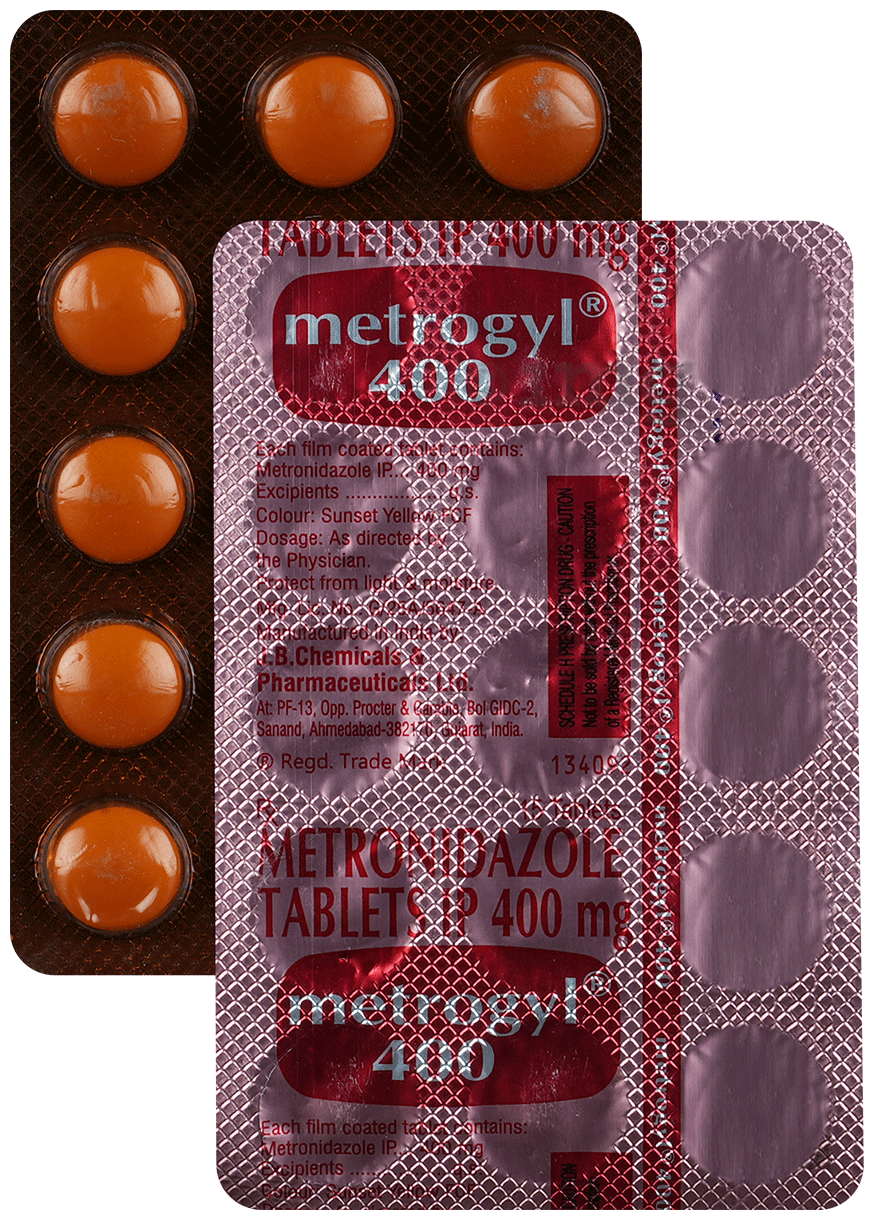
| Oral solid | 250 mg or 500 mg tablets; some markets also have capsules/ER products | Do not substitute immediate-release and extended-release products dose-for-dose without checking the label. |
| Oral liquid | Strengths vary by manufacturer; examples in practice may include 100 mg/5 mL or 200 mg/5 mL | These examples are not universal. Read the bottle: mg per 5 mL must be confirmed before calculating. |
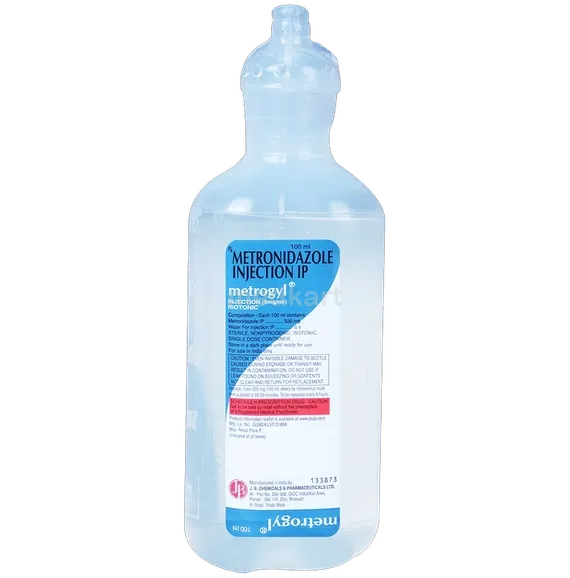
| IV premixed | 500 mg in 100 mL (5 mg/mL) | The referenced FDA/Pfizer presentation is ready to use and requires no dilution or buffering. |
| Vaginal | 0.75% gel and other product-specific strengths | Used for specific vaginal indications; not suitable for systemic infections or trichomoniasis treatment unless a guideline specifically recommends it. |
| Topical skin | Gel, cream or lotion in product-specific strengths | Dermatology use only; systemic dose tables do not apply. |
Verified adult regimens by indication
These are source-specific reference regimens, not a substitute for diagnosis or local antimicrobial policy.
| Indication | Verified regimen | Frequency/duration | Primary source |
|---|---|---|---|
| Serious susceptible anaerobic infection—IV label | Loading 15 mg/kg IV, then 7.5 mg/kg IV | Maintenance begins 6 hours after loading, then every 6 hours; usual course 7–10 days, individualised. Label maximum 4 g/24 h. | FDA metronidazole injection label |
| Bacterial vaginosis—oral | 500 mg orally | Twice daily for 7 days | CDC STI Treatment Guidelines |
| Bacterial vaginosis—vaginal | Metronidazole gel 0.75%, one full applicator (5 g) | Intravaginally once daily for 5 days | CDC STI Treatment Guidelines |
| Trichomoniasis—women | 500 mg orally | Twice daily for 7 days | CDC STI Treatment Guidelines |
| Trichomoniasis—men | 2 g orally | Single dose | CDC STI Treatment Guidelines |
| Acute intestinal amebiasis—oral product label | 750 mg orally | Three times daily for 5–10 days | FDA/DailyMed Flagyl labelling |
| Amebic liver abscess—oral product label | 500–750 mg orally | Three times daily for 5–10 days; drainage/other management may still be required | FDA/DailyMed Flagyl labelling |
Metronidazole should not be given simply for undifferentiated diarrhoea, nonspecific abdominal pain, viral illness or every vaginal discharge. Diagnosis and indication matter.
Paediatric dosing: what can safely be stated
The referenced US IV injection label states that safety and effectiveness in paediatric patients have not been established; therefore this article does not invent a general paediatric IV regimen from that label. Neonates can have markedly prolonged elimination, especially with lower gestational age, and require specialist neonatal dosing guidance.
For paediatric amebiasis, the referenced oral product information describes 35–50 mg/kg/day orally, divided into three doses, for 10 days. This regimen is indication-specific and must not automatically be used for giardiasis, anaerobic sepsis, dental infection or another diagnosis.
Paediatric calculation method
- Confirm the guideline dose in mg/kg/day, the child’s current weight and the indication.
- Daily dose (mg/day) = weight (kg) × prescribed mg/kg/day.
- If divided three times daily: single dose (mg) = total daily dose ÷ 3.
- Convert mg to mL only after reading the bottle concentration.
Educational example—not a prescription: if an authorised regimen is 40 mg/kg/day in three divided doses for a 15 kg child, total daily dose = 600 mg/day and the arithmetic dose is 200 mg per administration. If the verified bottle is 200 mg/5 mL, 200 mg = 5 mL. If the bottle has another concentration, the volume changes.
Liquid formula: volume per dose (mL) = required dose (mg) × labelled volume (mL) ÷ labelled drug amount (mg).
Round only according to the measuring device, pharmacy policy and clinically acceptable dose range. Use an oral syringe, not a household spoon.
IV preparation and administration note sheet
Premixed 500 mg/100 mL bag
- Confirm patient, indication, prescription, allergies, dose and the printed concentration: 500 mg/100 mL = 5 mg/mL.
- Inspect the solution and seal. Do not use if cloudy, precipitated, leaking or damaged.
- The referenced premixed bag requires no dilution or buffering. Do not add medicines to the bag.
- Administer by slow IV drip over 30–60 minutes.
- If using a primary IV fluid line, the referenced label directs stopping the primary solution during the metronidazole infusion.
- Avoid equipment containing aluminium that would contact the solution, as specified in this product label.
- Document dose, concentration, route, start/end time, line assessment and tolerance.
Important: if the available product is an ampoule, vial, concentrate or a different bag strength, do not copy the premixed-bag instructions. Follow that manufacturer’s current insert and hospital compatibility chart.
IV volume calculations for the 5 mg/mL premix
- Required volume = prescribed mg ÷ 5 mg/mL.
- 500 mg corresponds to 100 mL.
- 375 mg corresponds arithmetically to 75 mL.
- 250 mg corresponds arithmetically to 50 mL.
Partial-bag dosing must follow pharmacy/institutional policy for asepsis, measurement, labelling and disposal; bedside withdrawal from a premixed bag should not be improvised.
Renal, dialysis and hepatic considerations
- Severe hepatic impairment (Child-Pugh C): the IV label recommends reducing the metronidazole dose by 50%.
- Mild–moderate hepatic impairment: the label does not require routine adjustment but recommends monitoring for adverse effects.
- End-stage renal disease: metabolites may accumulate; monitor for toxicity.
- Haemodialysis: a 4–8-hour session removed approximately 40%–65% of a dose in the referenced label. If dosing cannot be separated from dialysis, a post-dialysis supplemental dose may need consideration under the treating protocol.
- CAPD: the referenced label states that routine adjustment is not required.
Pregnancy
Metronidazole crosses the placenta. CDC’s current online STI guideline pages state that available human data indicate low fetal risk and have not demonstrated teratogenic or mutagenic effects in multiple observational studies. Symptomatic pregnant patients with trichomoniasis should be tested and treated regardless of pregnancy stage; symptomatic bacterial vaginosis is also treated because of associated pregnancy risks.
Pregnancy does not justify self-treatment. The indication, formulation and regimen should be selected by the treating clinician. CDC advises avoiding certain less-studied vaginal products in pregnancy even though standard metronidazole regimens may be used.
Lactation
LactMed, last revised 15 March 2026, reports that infant exposure through milk after maternal oral or IV therapy is below doses used to treat infants, although metronidazole and its active metabolite are measurable. Reported concerns include occasional infant diarrhoea or Candida colonisation.
- Expert opinions vary for prolonged therapy.
- Some sources advise interrupting breastfeeding for 12–24 hours after a single 2 g oral dose, but not after lower divided doses.
- CDC notes that lower-dose multidose regimens produce lower milk concentrations and are generally considered compatible.
The decision should consider infant age/prematurity, maternal indication, dose and duration. Do not automatically stop breastfeeding without discussing the specific regimen.
Contraindications, interactions and warnings
- Previous hypersensitivity to metronidazole or another nitroimidazole.
- Avoid use with disulfiram or within two weeks of disulfiram because psychotic reactions have been reported.
- Check interactions with warfarin and other coumarin anticoagulants, lithium, busulfan, phenytoin/phenobarbital and other medicines listed in the current product insert.
- Stop and assess urgently for seizures, encephalopathy, cerebellar symptoms, aseptic meningitis, severe neuropathy or serious skin reaction.
- Monitor CBC when clinically indicated during prolonged/repeated courses, particularly with previous blood dyscrasia.
- Common adverse effects include nausea, abdominal discomfort, metallic taste and headache.
Alcohol: why sources appear different
Older/product labelling warns against alcohol or propylene-glycol-containing products during therapy and for at least three days afterward. CDC’s bacterial-vaginosis review states that convincing evidence for a disulfiram-like interaction is lacking and says abstinence is unnecessary. Because recommendations conflict, the article records both positions; clinicians should follow the current local product label and institutional policy.
Monitoring checklist
- Clinical response and source control where applicable.
- Culture/susceptibility and antimicrobial de-escalation for serious infection.
- Neurological symptoms during high cumulative exposure or prolonged therapy.
- Liver function and adverse effects in hepatic impairment.
- INR when used with warfarin; lithium level/clinical toxicity when relevant.
- Dialysis timing and post-dialysis plan in haemodialysis patients.
Primary and authoritative sources
- Pfizer current prescribing information: Metronidazole Injection 500 mg/100 mL
- FDA prescribing information: Metronidazole Injection, USP
- DailyMed current FDA-submitted drug labels—search “Flagyl metronidazole”
- CDC STI Treatment Guidelines: Bacterial Vaginosis
- CDC STI Treatment Guidelines: Trichomoniasis
- NIH/NLM LactMed: Metronidazole—revised 15 March 2026
Limitations
This page does not attempt to reproduce every national or hospital regimen. Giardiasis, dental infections, intra-abdominal combinations, C. difficile infection, recurrent BV and neonatal care require diagnosis-specific current guidance; recommendations can differ by country, resistance pattern and formulary. A product available in India may have a different strength or insert from the US-labelled examples.
Related reading
Last reviewed: 19 September 2026
Medical disclaimer: This clinician-facing educational reference is not an individual prescription or a substitute for examination, microbiology results, the current Indian product insert, specialist advice or a hospital antimicrobial policy. Independently verify patient, diagnosis, allergy, weight, dose, concentration, route, compatibility, organ function, pregnancy/lactation status and monitoring before prescribing or administration.