
Drug Doses & Preparation | High-alert medicine
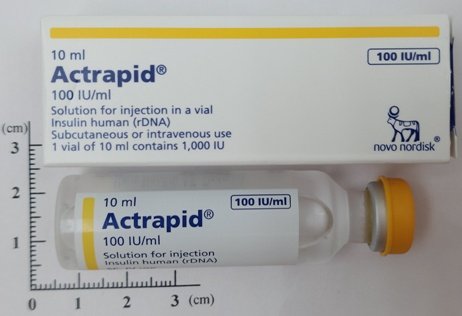
Regular human insulin is a high-alert medicine. The referenced FDA label is for Novolin R U-100 (100 units/mL). Insulin products, concentrations and devices are not interchangeable without careful verification. Always follow the exact product label, prescription, local insulin protocol and independent double-check policy.
Core dose principle
The label states that insulin dose and timing must be individualised and that blood-glucose monitoring is essential. Requirements change with meals, activity, illness, stress, organ function and interacting medicines. This article therefore does not provide a stand-alone correction scale, DKA protocol or patient-specific dose.
Subcutaneous administration
- Concentration: U-100 means 100 units in each mL.
- Timing in this label: Generally administer approximately 30 minutes before a meal.
- Sites: Abdomen, buttock, thigh or upper arm; rotate injection sites within the same region.
- Appearance: Use only if clear and colourless. Do not use if cloudy, viscous, leaking, frozen or expired.
Volume calculation
For U-100 insulin, volume in mL = prescribed units ÷ 100. For example, a prescribed 6-unit dose mathematically equals 0.06 mL. In routine SC practice, use a correctly matched U-100 insulin syringe or approved device rather than measuring tiny volumes with a general-purpose syringe. The example is educational arithmetic, not a treatment recommendation.
Labelled intravenous preparation range
The referenced label allows IV administration only under medical supervision, with close glucose and potassium monitoring. It describes concentrations from 0.05 to 1 unit/mL in polypropylene infusion bags using 0.9% sodium chloride, 5% dextrose, or 10% dextrose with 40 mmol/L potassium chloride.
Educational preparation example: To make 1 unit/mL in a final volume of 100 mL, the arithmetic requirement is 100 units of U-100 insulin (1 mL), with the final volume adjusted to 100 mL using a compatible labelled fluid. Actual preparation must follow the institution’s validated protocol, including bag/tubing priming, adsorption precautions, aseptic technique, labelling and an independent double check.
Critical safety warnings
- Never write or interpret “U” as an abbreviation for units; it can be mistaken for a zero.
- Confirm insulin name, concentration, route, device, prescribed units and meal/infusion context.
- IV insulin requires frequent blood-glucose and potassium monitoring because severe hypoglycaemia and hypokalaemia can occur.
- Do not mix regular insulin with another insulin for IV use.
- For SC mixing, the referenced product label permits mixing only with NPH human insulin and directs drawing regular insulin into the syringe first; follow the current local product insert.
- Requirements may be lower in renal or hepatic impairment; dose changes require clinical supervision.
- Beta-blockers and some other medicines can mask hypoglycaemia warning symptoms.
Storage from the referenced product label
Unopened vials are refrigerated at 2–8°C and must not be frozen. The referenced label gives product-specific room-temperature and in-use limits; these vary by brand and presentation, so use the expiry and storage instructions printed on the actual Indian product.
Official source
FDA prescribing information: Novolin R, regular human insulin U-100 (label revision shown in the document: 2012). Because product labelling evolves, verify the current manufacturer insert and local hospital protocol before clinical use.
Related reading
Last reviewed: 19 September 2026
Medical disclaimer: This is a professional educational summary, not an insulin prescription or bedside protocol. Insulin errors can cause death. Verify the current product, prescribed dose, concentration, route, calculation, compatibility, monitoring plan and institutional policy independently before preparation or administration.