
- MoHFW/PIB published the update on 24 September 2026 at 12:36 PM.
- India reported more than 1.8 lakh Ayushman Arogya Mandirs, over 900 million unique health identities and more than 497 million e-Sanjeevani teleconsultations.
- The release also reported nearly 225 million viral-hepatitis screenings and more than 7.29 crore sickle-cell screenings.
- These are government-reported programme figures; they are not, by themselves, measures of clinical outcomes or quality.
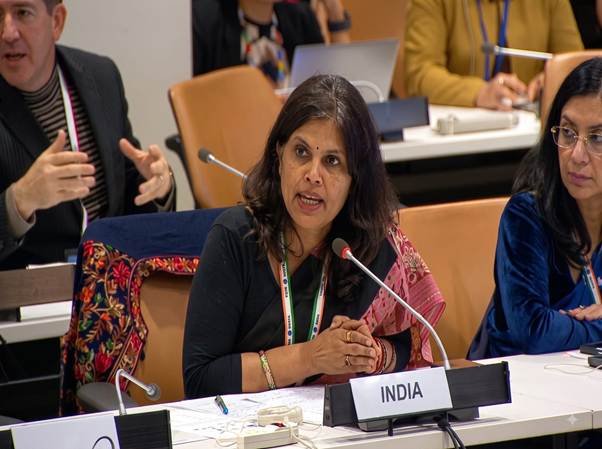
India’s health-system update at UNGA81: The Union Health Secretary presented India’s progress on universal health coverage, viral-hepatitis elimination and sickle-cell care during health engagements held alongside the 81st United Nations General Assembly in New York.
Featured image credit: Press Information Bureau / Ministry of Health & Family Welfare, Government of India.
The official release brings together several large programme figures. For doctors, health administrators and public-health teams, the key question is not only how large the programmes have become, but how these platforms translate into early diagnosis, referral continuity, treatment access and measurable patient outcomes.
What is new?
The Ministry of Health and Family Welfare said India highlighted an integrated approach linking comprehensive primary care, financial protection, digital health and referral services. The update was released by PIB on 24 September 2026.
India also participated in the launch of OneSCD, a global partnership intended to advance equitable and accessible sickle-cell care. The partnership brings together government and international organisations, including WHO, UNICEF, Africa CDC and other partners.
Key official figures
| Programme area | Figure reported by MoHFW/PIB | How to interpret it |
|---|---|---|
| Ayushman Arogya Mandirs | More than 1.8 lakh | Reported service-delivery network; does not alone describe staffing, availability or quality at every facility. |
| Unique health identities | More than 900 million | Digital identity creation; not the same as complete longitudinal records or regular service use. |
| e-Sanjeevani | More than 497 million teleconsultations | Cumulative consultations; outcome and follow-up data require separate assessment. |
| Viral hepatitis | Nearly 225 million people screened since programme launch | Screening reach; confirmation, linkage to care and treatment completion remain separate indicators. |
| Sickle-cell mission | More than 7.29 crore screened; over 20 lakh carriers; 2.5 lakh diagnosed | Programme-reported counts that require continuing counselling, confirmatory pathways and long-term care. |
| Sickle Cell Cards | More than 4.93 crore distributed | Supports communication and tracking but is not a substitute for clinical follow-up. |
What this means for doctors and health facilities
Primary-care teams remain central to screening and continuity. A screening test should lead to an appropriate confirmatory pathway, counselling, referral where required, treatment initiation and follow-up. Large screening totals are useful only when positive results are acted upon safely and promptly.
For viral hepatitis, the official release says services extend from nearly 1.80 lakh primary-care facilities to tertiary centres, supported by 1,039 treatment centres. Clinicians should follow the applicable national programme algorithms for testing, confirmation, treatment eligibility and referral rather than interpreting a screening result in isolation.
For sickle-cell disease, the programme approach includes population screening, early diagnosis, counselling, treatment, follow-up and digital tracking. Carrier identification requires clear counselling: carrier status is not the same as sickle-cell disease, and family or reproductive counselling should be non-stigmatising and confidential.
Digital health: opportunity and safeguards
Digital identities and teleconsultations can reduce geographical barriers, particularly in rural and underserved areas. However, reliable connectivity, correct patient matching, privacy, documentation, referral closure and access to in-person examination remain important limitations.
Teleconsultation should not delay emergency assessment. Patients with red-flag symptoms, unstable observations or conditions requiring physical examination must be directed to appropriate in-person care.
What is known
- The official release describes government programme progress presented at UNGA81.
- India reiterated the 2030 goal of eliminating hepatitis B and C as public-health threats.
- The National Sickle Cell Anaemia Elimination Mission has a stated 2047 elimination goal.
- MoHFW highlighted affordable point-of-care diagnostics, hydroxyurea access and research toward an indigenous gene-editing therapy.
Limitations and uncertainties
The release is a programme update rather than an independent effectiveness study. It does not provide district-level coverage, denominator-based uptake, false-positive rates, treatment-completion rates, mortality outcomes or a comparison group. Reported cumulative counts should therefore not be presented as proof that every person has received complete or high-quality care.
The indigenous gene-editing work mentioned in the release remains research activity. It should not be described as routine, approved or widely available treatment unless a regulator and official programme issue a specific approval.
Official source
Related reading
Last reviewed: 25 September 2026, 10:20 AM IST.