
Drug Doses & Preparation | Complete professional monograph and note sheet
Amikacin is a parenteral aminoglycoside antibiotic reserved for susceptible serious bacterial infections. Safe use requires weight-based calculation, renal assessment, concentration and infusion verification, microbiology review and therapeutic drug monitoring (TDM) where indicated.
Quick note sheet
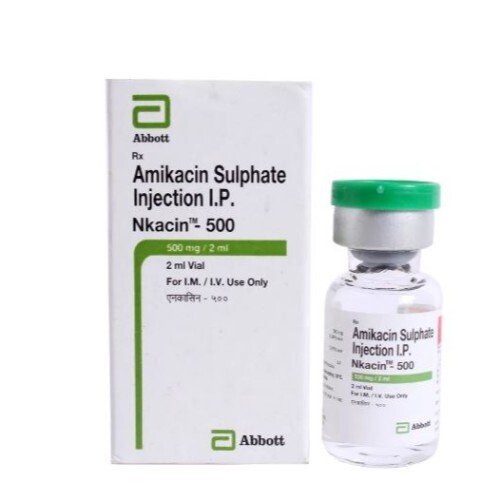
- Common injection concentration: 250 mg/mL (for example, 500 mg/2 mL); verify every product.
- Label conventional dosing: 15 mg/kg/day IM or IV divided every 8 or 12 hours in adults, children and older infants with normal renal function; maximum 1.5 g/day.
- Adult IV infusion: dilute the calculated dose and infuse over 30–60 minutes according to the label.
- Infants: the cited label administers IV infusion over 1–2 hours; neonatal dosing requires a specialist protocol.
- Key safety: nephrotoxicity, ototoxicity and neuromuscular blockade; monitor renal function and drug concentrations.
Clinical role and indications
Amikacin is used for serious infections caused by susceptible Gram-negative organisms and selected other bacteria when culture results, local resistance patterns and antimicrobial-stewardship policy support its use. Obtain appropriate cultures before therapy where feasible and narrow or stop treatment when microbiology permits. It is not appropriate for uncomplicated viral illness or unverified routine prophylaxis.
Marketed formulations and strengths
| Form | Example strength | Safety note |
|---|---|---|
| Injection vial/ampoule | 100 mg/2 mL (50 mg/mL) | Lower-concentration presentations may exist; confirm label. |
| Injection vial/ampoule | 500 mg/2 mL (250 mg/mL) | High concentration—mg-to-mL error risk. |
| Other presentations | Market-dependent | Never infer concentration from brand name or container size. |
Verified adult and paediatric dosing
| Population | Official-label conventional regimen | Important conditions |
|---|---|---|
| Adults, children and older infants with normal renal function | 15 mg/kg/day IM or IV, divided as 7.5 mg/kg every 12 hours or 5 mg/kg every 8 hours. | Base on an appropriate dosing weight and clinical protocol. Maximum total daily dose in the cited label: 1.5 g. |
| Neonates | The cited labels include neonatal regimens, but intervals depend strongly on gestational/postnatal age and renal function. | Use a current neonatal formulary and specialist protocol; do not extrapolate the older-infant schedule. |
| Renal impairment | Individualise loading and maintenance doses using renal function and measured serum concentrations. | Do not use a fixed interval without TDM/renal review. |
Duration: the official label notes that uncomplicated infections caused by susceptible organisms generally respond within 24–48 hours and a usual course is 7–10 days; prolonged treatment increases toxicity and demands intensified monitoring. Duration must be infection- and source-specific.
Educational calculation example
An adult weighing 60 kg is prescribed 7.5 mg/kg every 12 hours:
Dose = 60 kg × 7.5 mg/kg = 450 mg. With a verified concentration of 250 mg/mL, withdrawal volume = 450 mg ÷ 250 mg/mL = 1.8 mL.
The prescriber/pharmacist must confirm the appropriate dosing weight, renal function, dose cap, interval, serum-level plan and final infusion concentration. This calculation is not a patient-specific recommendation.
Reconstitution, dilution and preparation
Amikacin injection is generally supplied as a solution; do not “reconstitute” a ready-to-use vial. For adult IV infusion, the cited label describes adding a 500-mg dose to 100–200 mL of a compatible diluent such as 0.9% sodium chloride or 5% dextrose. For smaller or fluid-restricted doses, use a pharmacy-approved concentration supported by the actual label and local protocol.
- Verify patient identity, infection/indication, cultures, allergy history, weight, renal function and most recent drug levels.
- Confirm the vial’s total content and concentration in mg/mL.
- Calculate dose in milligrams first, then calculate withdrawal volume. Obtain an independent double-check for paediatric, neonatal and renal-adjusted doses.
- Use aseptic technique; inspect the solution and container.
- Add the calculated dose to a label-approved compatible diluent and clearly label drug, total dose, final volume/concentration, preparation time and expiry/beyond-use time.
- Do not physically premix amikacin with beta-lactam antibiotics. Use separate preparation/administration and flush the line according to compatibility and hospital policy.
Route, administration method and rate
- IM: administer deep IM when appropriate and permitted by the product label.
- Adult IV: infuse over 30–60 minutes.
- Infant IV: the cited label recommends infusion over 1–2 hours.
- Never give as an unverified rapid IV push.
Infusion example
If 450 mg is placed in a final volume of 100 mL and ordered over 60 minutes, the pump rate is 100 mL/hour. The final concentration is 4.5 mg/mL. Both values must be checked against the actual product information and institutional compatibility limits.
Storage, stability and compatibility
Store unopened product according to the manufacturer’s label and protect it from conditions stated on the pack. The official label lists compatible infusion diluents, but stability depends on concentration, diluent, container, temperature and aseptic practice. Assign no generic beyond-use time. Aminoglycosides and beta-lactams can undergo in-vitro inactivation when mixed; do not combine in the same bag or syringe, and follow line-separation/flush policy.
Renal and hepatic considerations
Amikacin is eliminated mainly by the kidneys. Measure baseline and serial renal function and use serum concentrations to individualise treatment in renal impairment, critical illness, older adults, obesity, burns, cystic fibrosis, unstable renal function or prolonged therapy. The label describes a 7.5 mg/kg loading dose followed by adjusted maintenance dosing, but modern institutional protocols may use pharmacokinetic/TDM methods; do not calculate an interval from serum creatinine alone without local guidance. Hepatic impairment does not usually drive dose adjustment directly, but ascites, altered volume of distribution and concurrent organ failure can change exposure.
Therapeutic drug monitoring
TDM targets depend on conventional versus extended-interval dosing, infection site, organism MIC and local assay timing. Record exact dose and sample times. Do not interpret a concentration without knowing whether it is a peak, trough or random level. A rising trough or creatinine requires prompt review; use the hospital’s aminoglycoside nomogram/pharmacy service rather than a generic internet target.
Pregnancy and lactation
Aminoglycosides may cause fetal harm, including ototoxicity, and should be used in pregnancy only when the expected benefit justifies the risk and an appropriate alternative is unavailable. Amikacin may be present in human milk in small amounts; systemic absorption by the infant is expected to be limited, but the decision should consider infant age, gut condition, therapy duration and monitoring. Consult the current product label and obstetric/paediatric specialists.
Contraindications, major interactions and precautions
- Contraindication: hypersensitivity to amikacin; cross-sensitivity among aminoglycosides may occur.
- Major interactions: other nephrotoxic or ototoxic medicines (for example vancomycin, amphotericin B, cisplatin, ciclosporin/tacrolimus and loop diuretics), neuromuscular blockers and potent diuretics. Assess cumulative risk.
- Precautions: renal impairment, pre-existing hearing/vestibular disorder, myasthenia gravis or other neuromuscular disease, dehydration, older age and prolonged/repeated aminoglycoside exposure.
Adverse effects
Common/important: rise in serum creatinine, injection-site discomfort, nausea and laboratory abnormalities. Serious: potentially irreversible auditory or vestibular toxicity, nephrotoxicity, neuromuscular blockade with respiratory paralysis, severe hypersensitivity and superinfection. Tinnitus, hearing change, vertigo, reduced urine output, weakness or breathing difficulty requires urgent review.
Monitoring checklist
- Culture/susceptibility, infection site and clinical response
- Accurate weight and dosing-weight method
- Baseline and serial creatinine/estimated renal function; urine output
- Amikacin concentrations with exact collection timing
- Hearing and vestibular symptoms; audiometry when risk/duration warrants
- Concomitant nephrotoxic, ototoxic or neuromuscular-blocking drugs
- Hydration status and relevant electrolytes
- Daily need for continued aminoglycoside therapy and de-escalation opportunity
Medication-error and concentration warnings
- 500 mg/2 mL equals 250 mg/mL—not 500 mg/mL.
- Use milligrams for prescribing and document the concentration used to calculate mL.
- Confusing conventional and extended-interval protocols can produce toxic or ineffective exposure.
- Wrong sampling time can make a valid drug level clinically misleading.
- Do not use an adult interval for a neonate or a normal-renal-function interval in renal impairment.
What is known
Official prescribing information supports weight-based conventional amikacin dosing, dilution for IV infusion and close surveillance for renal, auditory and vestibular toxicity. TDM and microbiology-guided review improve safe individualisation.
Limitations and uncertainties
This guide does not provide a universal extended-interval nomogram, neonatal schedule, dialysis regimen, endocarditis regimen or infection-specific PK/PD target. Those decisions require local resistance data, patient pharmacokinetics, assay timing and specialist protocols. Indian products may differ in excipients, authorised indications and stability data.
Primary and authoritative sources
- DailyMed: Amikacin Sulfate Injection official prescribing information
- DailyMed/FDA label: IV preparation and administration information
Related reading
Drug Doses & Preparation A–Z directory | Metronidazole complete dose and preparation guide
Last reviewed: 27 September 2026