
Clinician drug monograph • Last reviewed: 20 September 2026
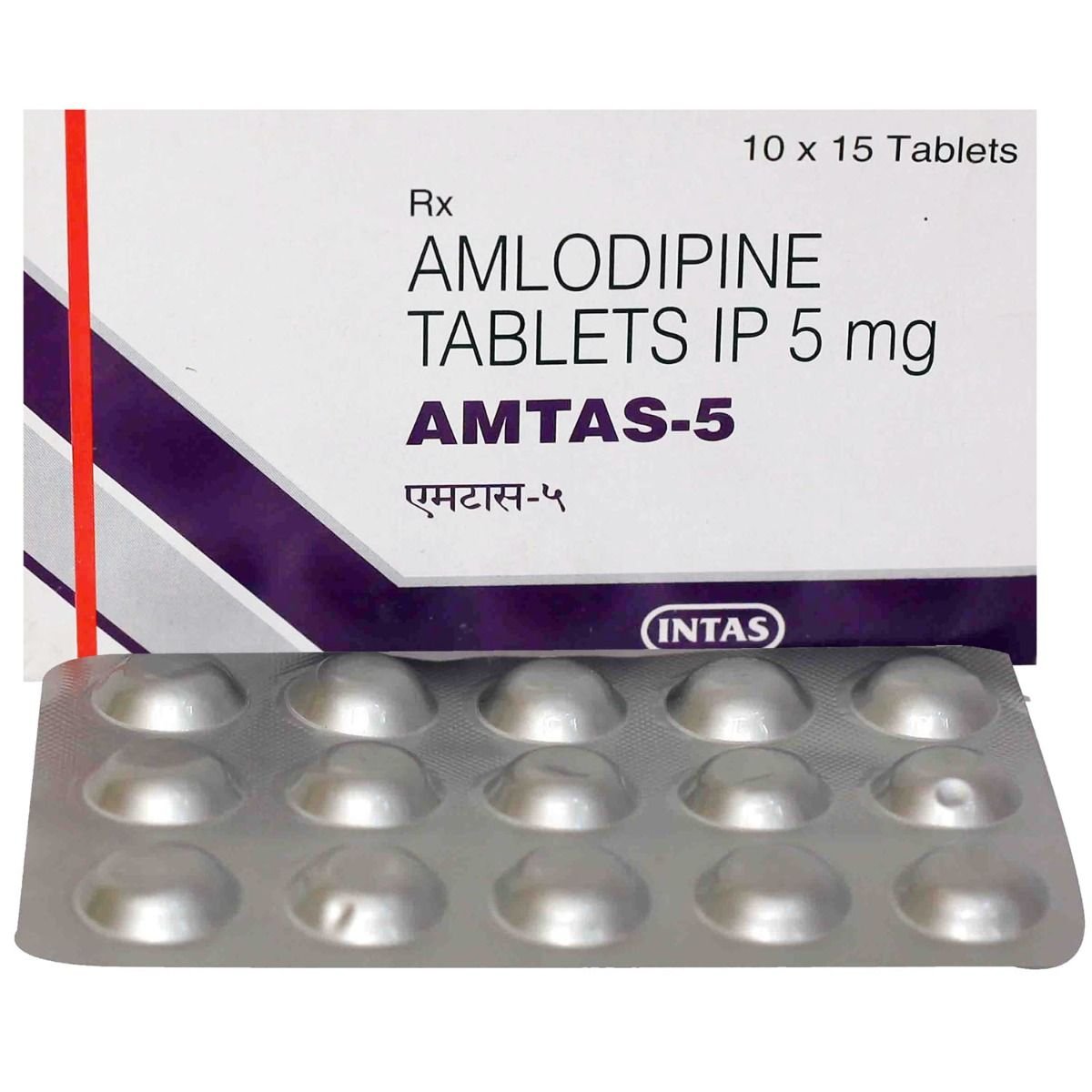
Amlodipine is an oral dihydropyridine calcium-channel blocker used for hypertension and selected coronary-artery/angina indications. It is not a rescue treatment for acute chest pain or hypertensive emergency.
Forms and strengths
The current US label lists tablets 2.5 mg, 5 mg and 10 mg. Indian brands and pack designs vary; this page shows a verified 5 mg tablet pack example. Confirm the strength printed on the strip before administration.
Labelled dosing
- Adults with hypertension: usual initial 5 mg once daily; maximum 10 mg once daily.
- Small, frail or elderly patients and hepatic insufficiency: label allows a 2.5 mg once-daily starting dose.
- Chronic stable/vasospastic angina and documented CAD: labelled range 5–10 mg once daily.
- Children 6–17 years with hypertension: 2.5–5 mg once daily; doses above 5 mg/day have not been studied in the label.
Educational tablet example: a prescribed 5 mg dose supplied as a 5 mg tablet equals one tablet. Never split an unscored tablet unless the actual product label/pharmacist confirms it is suitable.
Preparation and administration
No reconstitution or IV dilution applies to the tablet form. Give orally at a consistent time, with or without food, according to the prescription. Check swallowing ability and do not assume tablets are crushable.
Renal/hepatic considerations
Renal impairment does not significantly alter pharmacokinetics in the label, so the usual initial dose may be used. Hepatic clearance is reduced; start lower and titrate slowly in severe hepatic impairment.
Pregnancy and lactation
Human pregnancy and lactation decisions require current label review and individual benefit–risk assessment. Do not start, stop or switch antihypertensive treatment without the treating clinician.
Contraindications, interactions and warnings
- Contraindicated with known sensitivity to amlodipine.
- Symptomatic hypotension can occur, particularly with severe aortic stenosis.
- Angina or myocardial infarction can worsen after initiation or dose increase in severe obstructive coronary disease.
- Strong CYP3A inhibitors may increase exposure; simvastatin exposure can rise. Check the full label and interaction list.
Adverse effects and monitoring
Common effects include peripheral oedema, dizziness, flushing, palpitations and fatigue. Monitor blood pressure, oedema, dizziness/falls, angina symptoms and adherence. Seek urgent assessment for syncope, severe hypotension or worsening chest pain.
Storage
Store in the original pack under the temperature/light conditions on the current Indian label, away from moisture and children.
Primary source
DailyMed amlodipine besylate prescribing information.
Medication-error warning: verify generic name, tablet strength, brand pack, prescription and local protocol before dispensing or administration.
Medical disclaimer: Professional education only; not individual treatment advice or a substitute for the current approved label and treating clinician.