
Emergency drug monograph. Atropine is an antimuscarinic medicine used for clinically significant symptomatic bradycardia and selected cholinergic poisonings. It is not a universal treatment for every slow heart rate, and it should not delay pacing or other escalation when indicated.
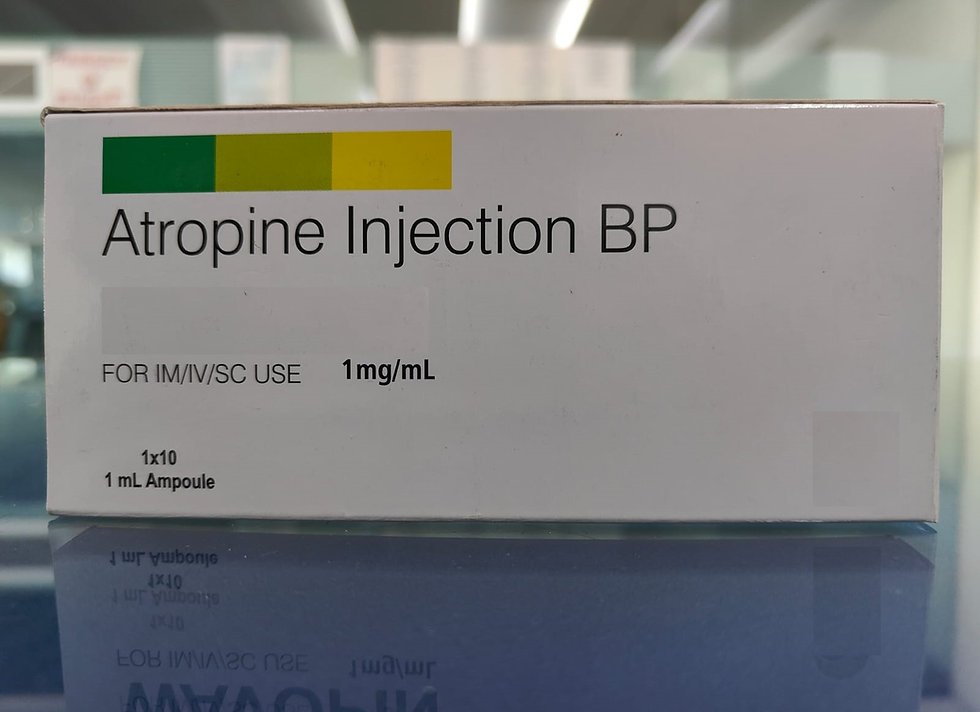
Formulations encountered in emergency care
- Atropine sulfate injection in ampoules/vials; 0.6 mg/mL and 1 mg/mL presentations are encountered in different markets.
- Prefilled syringes may contain a different total dose and concentration.
- Ophthalmic atropine is a separate product and must never be substituted for injectable atropine.
Adult symptomatic bradycardia
The AHA adult bradycardia algorithm recommends 1 mg IV, repeated every 3–5 minutes to a maximum total dose of 3 mg when bradycardia is causing cardiopulmonary compromise. If ineffective, do not keep repeating beyond the algorithm maximum: prepare transcutaneous pacing and/or the recommended chronotropic infusion pathway while seeking expert help.
Volume calculation: required dose (mg) ÷ verified concentration (mg/mL). For a labelled 0.6 mg/mL ampoule, a 1 mg dose mathematically equals 1.67 mL; this requires more than one 1 mL ampoule. For a 1 mg/mL product, 1 mg equals 1 mL. These are educational calculations—confirm local stock and label before drawing up.
Paediatric bradycardia
In paediatric resuscitation, atropine is reserved for bradycardia caused by increased vagal tone or primary AV block; oxygenation and ventilation remain central. The AHA PALS algorithm uses 0.02 mg/kg IV/IO, repeat once if needed, with age/weight-specific minimum and maximum limits. Because these limits and indications are critical, use the current PALS card at the bedside rather than memory alone.
Cholinergic/organophosphate poisoning
Atropine dosing in significant poisoning is titrated rapidly to clinical endpoints such as drying of bronchial secretions and improved ventilation—not to pupil size or heart rate alone. Requirements can be very large and vary widely. Activate the poison centre/toxicology protocol immediately; atropine does not reactivate acetylcholinesterase, so an oxime and decontamination may also be required depending on the agent.
Preparation, route and administration
- For bradycardia, commercial injection is generally administered as an IV bolus followed by a compatible flush according to the resuscitation protocol; routine dilution is usually unnecessary when the required volume can be measured accurately.
- For IM use in poisoning when IV access is unavailable, follow the exact approved label/toxicology protocol.
- Label syringes immediately. State the concentration, total mg and total mL during handover.
- Inspect the solution and ampoule integrity. Store and protect from light as stated by the manufacturer.
Renal/hepatic impairment, pregnancy and lactation
Emergency dosing is driven by indication and response rather than a routine renal adjustment table. Use caution in severe hepatic or renal disease because clinical response may be less predictable. In pregnancy or lactation, a life-threatening maternal indication takes priority; use the lowest effective protocol-directed exposure and involve obstetric/paediatric expertise when feasible.
Contraindications, interactions and monitoring
In a life-threatening emergency there may be no absolute contraindication. Outside resuscitation, use caution in narrow-angle glaucoma, obstructive uropathy, gastrointestinal obstruction/ileus, myasthenia gravis, hyperthermia, tachyarrhythmia and acute myocardial ischaemia. Additive anticholinergic effects can occur with antihistamines, tricyclic antidepressants, antipsychotics and other antimuscarinic medicines.
Monitor ECG/rhythm, heart rate, blood pressure, oxygenation, mental status, temperature, urinary retention and bowel sounds. Common effects include dry mouth, blurred vision, tachycardia, flushing and urinary retention. Serious effects include delirium, hyperthermia, arrhythmia, acute glaucoma and severe anticholinergic toxicity.
What remains uncertain
Indian-market availability, strength, manufacturer and pack design change over time. The image is representative and not proof of local stock. Confirm the actual ampoule and current institutional crash-cart standard.
Official sources
- US FDA-approved atropine sulfate labels via DailyMed
- American Heart Association CPR and ECC algorithms
- US HHS CHEMM atropine emergency information
- CDSCO approved-drug resources
Related: ABCDE Primary Survey · Drug Doses & Preparation A–Z
Last reviewed: 20 September 2026
Medical disclaimer: This clinician-facing educational guide is not an individual prescription. Emergency medicines must be used by trained professionals with the current label, resuscitation algorithm and local protocol.