
Drug Doses & Preparation | Complete professional monograph and note sheet
Furosemide is a potent loop diuretic used when rapid or reliable diuresis is required. Dose and response vary substantially with indication, renal function, prior diuretic exposure and haemodynamic status; treatment must therefore be individualised and clinically monitored.
Quick note sheet
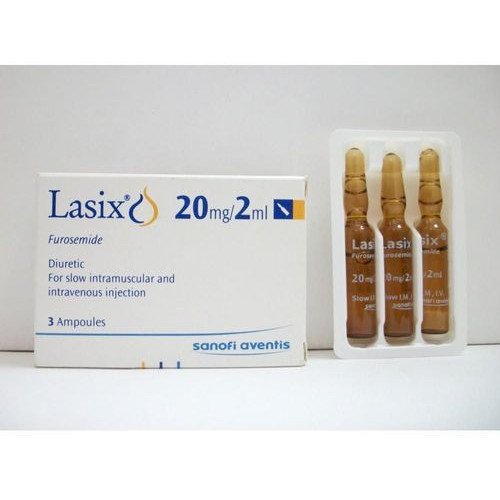
- Common injection concentration: 10 mg/mL (for example, 20 mg/2 mL).
- Adult oedema—label starting dose: 20–40 mg IV or IM; repeat or titrate only according to response and the product label.
- Paediatric oedema—label starting dose: 1 mg/kg IV or IM, administered slowly; subsequent increases require clinical reassessment.
- Rate warning: rapid injection and excessive exposure increase ototoxicity risk. Follow the exact product label; where a rate is specified for high-dose parenteral therapy, do not exceed 4 mg/min.
- Key monitoring: fluid balance, blood pressure, renal function, sodium, potassium, magnesium, calcium and hearing risk.
Clinical role and indications
Injectable furosemide is used for oedema associated with conditions such as heart failure, hepatic cirrhosis and renal disease when parenteral treatment is appropriate. Some labels also include adjunctive treatment of acute pulmonary oedema. It treats fluid overload; it does not correct the underlying cause.
Marketed formulations and strengths
| Form | Common strength | Practical note |
|---|---|---|
| Injection ampoule/vial | 10 mg/mL; commonly 20 mg/2 mL | Confirm concentration every time; presentations vary. |
| Oral tablet | 20 mg, 40 mg and other market-dependent strengths | Bioavailability and switching require clinical judgement. |
| Oral solution | Market-dependent | Verify mg/mL, measuring device and excipients. |
Verified adult dosing
| Situation | Official-label starting regimen | Safety points |
|---|---|---|
| Oedema requiring parenteral therapy | 20–40 mg IV or IM initially. Further dosing is based on response and label instructions. | Assess volume status, blood pressure, urine output, renal function and electrolytes before escalation. |
| Acute pulmonary oedema | Some US labels describe 40 mg IV slowly, with a further 80 mg after one hour if response is inadequate. | Use only in a monitored acute-care setting and follow the locally approved label/protocol. |
Clinical caution: Do not convert these starting doses into an automatic repeat schedule. Patients with chronic kidney disease or prior loop-diuretic exposure may respond differently, while frail or volume-depleted patients may be harmed by routine escalation.
Verified paediatric dosing
For oedema, the US prescribing information gives an initial parenteral dose of 1 mg/kg IV or IM, administered slowly. If clinically necessary, the dose may be increased by 1 mg/kg no sooner than two hours after the preceding dose; doses above 6 mg/kg are not recommended in that label. Neonates, premature infants and children with renal or cardiac disease require specialist protocols because exposure, nephrocalcinosis risk and monitoring needs differ.
Educational calculation example
A 20-kg child is prescribed 1 mg/kg:
Dose = 20 kg × 1 mg/kg = 20 mg. If the verified ampoule concentration is 10 mg/mL, volume = 20 mg ÷ 10 mg/mL = 2 mL.
This is a calculation demonstration, not a prescription. Independently verify weight, indication, maximum dose, concentration, route and institutional paediatric policy.
Preparation, route and administration
- Confirm the order, indication, patient weight where relevant, allergies, renal function, electrolytes, fluid status and current diuretics.
- Read the ampoule/vial label and verify total milligrams and mg/mL. Do not identify strength by ampoule appearance.
- Inspect the solution and container. Do not use particulate, discoloured, damaged or expired product.
- Calculate and independently check the required volume.
- Administer by the ordered route. For IV use, give slowly at the product-specific rate. Avoid rapid bolus administration.
- If dilution or continuous infusion is required, use only a diluent, final concentration, container and beyond-use time supported by the actual product label, pharmacy data and local protocol.
- Document dose, route, time, response, urine output and relevant observations.
Rate example
If a protocol limits the rate to 4 mg/min, a 40-mg dose requires at least 10 minutes (40 ÷ 4). A slower rate may be required by the product label or patient factors. Never use this arithmetic to override a stricter local instruction.
Storage, stability and compatibility
Store exactly as stated on the manufacturer’s pack, protect from conditions specified in the label and keep ampoules in their original packaging until use. Furosemide solutions are alkaline and may precipitate when mixed with acidic solutions. Do not mix with another medicine in the same syringe or line unless compatibility has been confirmed by an authoritative compatibility reference or pharmacy. Do not assign a generic beyond-use time to a diluted solution; product, concentration, diluent, container and aseptic conditions all matter.
Renal and hepatic considerations
Renal impairment may reduce diuretic response and prompt specialist titration, but rising creatinine can also signal hypovolaemia or haemodynamic deterioration. In severe progressive renal disease, marked azotaemia/oliguria or worsening laboratory values require reassessment and may require discontinuation. In cirrhosis, excessive diuresis can precipitate electrolyte disturbance and hepatic encephalopathy; initiate and monitor carefully, often in hospital.
Pregnancy and lactation
Use in pregnancy only when the expected benefit justifies fetal risk and maternal/fetal monitoring is available; diuretics are not routine treatment for physiological pregnancy oedema. Furosemide is present in human milk and intense diuresis may impair lactation. Decide with the treating clinician whether to continue breastfeeding or the medicine, considering dose, indication and infant risk.
Contraindications, major interactions and precautions
- Contraindication: anuria and hypersensitivity to furosemide or formulation components, subject to the specific label.
- Major risks: profound diuresis, dehydration, hypotension, electrolyte depletion, renal dysfunction and ototoxicity.
- Important interactions: other ototoxic medicines (including aminoglycosides), lithium, NSAIDs, nephrotoxic medicines, antihypertensives and drugs affected by potassium disturbance. Review the complete medication list.
Adverse effects
Common/clinically expected: increased urination, dizziness, hypotension, dehydration and electrolyte abnormalities. Serious: severe volume depletion, arrhythmia related to electrolyte loss, acute kidney injury, hearing impairment/tinnitus, pancreatitis, severe skin reaction and blood dyscrasia. Urgent assessment is required for collapse, marked hypotension, oliguria, arrhythmia symptoms, acute hearing change or severe rash.
Monitoring checklist
- Indication, weight and volume status
- Blood pressure and clinical perfusion
- Intake, urine output and daily weight when appropriate
- Serum sodium, potassium, magnesium, calcium, bicarbonate, urea and creatinine
- Glucose and uric acid when clinically relevant
- Hearing symptoms, especially with high dose, rapid IV administration, renal impairment or other ototoxic drugs
- Therapeutic response and need for each further dose
Medication-error and concentration warnings
- Confusing mg with mL can cause a tenfold error—write both dose and concentration.
- Do not assume every ampoule is 10 mg/mL.
- Do not administer rapidly because the volume is small.
- Check concurrent fluids and other diuretics to prevent unintended cumulative treatment.
What is known
Official labels support parenteral furosemide for selected oedematous states and provide starting doses and key safety warnings. Response is highly patient-specific, making clinical reassessment and laboratory monitoring essential.
Limitations and uncertainties
Regimens vary by indication, country, product and hospital protocol. This guide does not cover neonatal specialist dosing, continuous high-dose infusions, renal-replacement therapy or disease-specific escalation pathways. Indian brands and authorised indications may differ from the cited US label.
Primary and authoritative sources
- US FDA: Furosemide Injection prescribing information (2024)
- DailyMed: Furosemide Injection official label
Related reading
Drug Doses & Preparation A–Z directory | Metronidazole complete dose and preparation guide
Last reviewed: 27 September 2026