
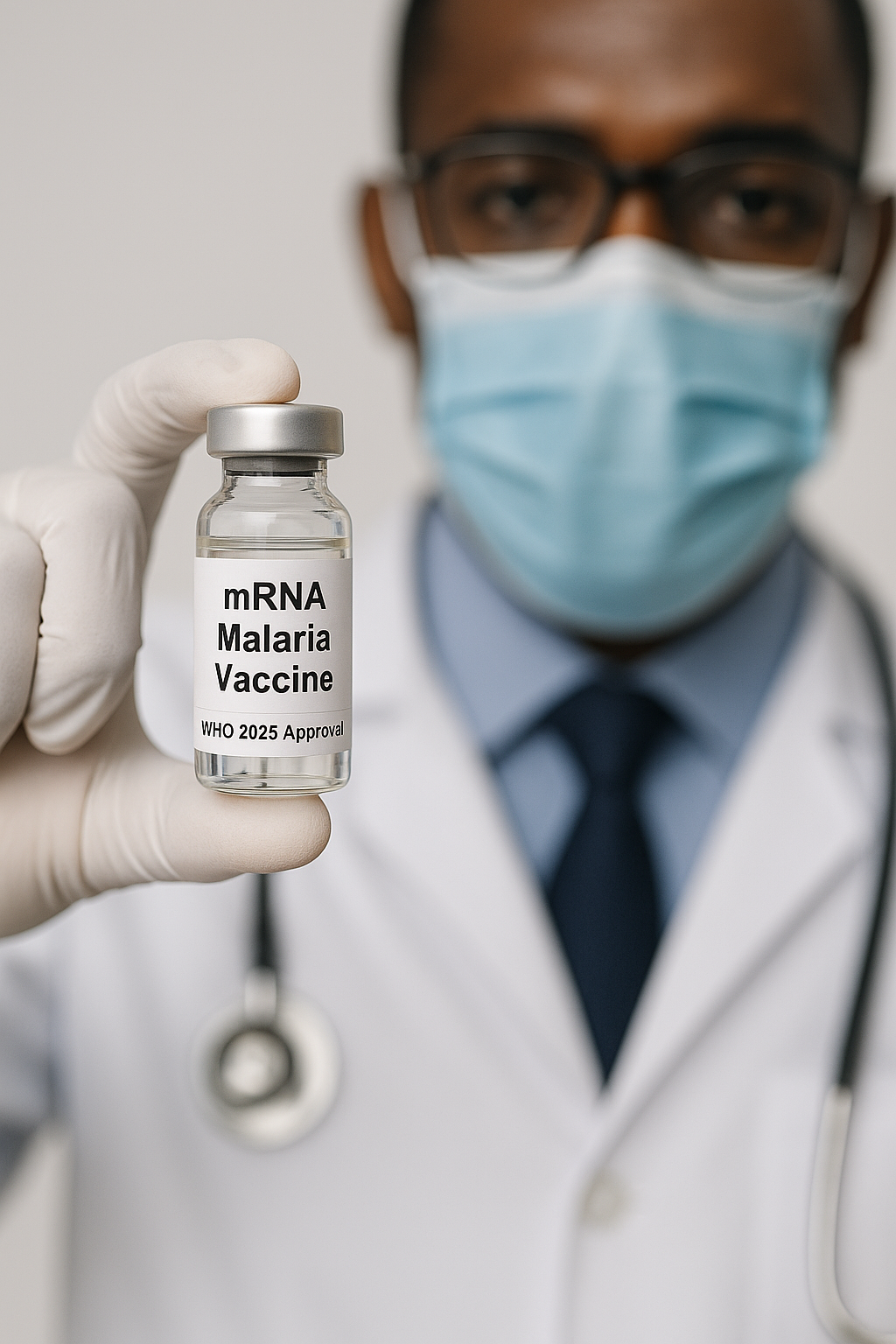
Correction — 13 September 2026: The earlier version incorrectly described “PfSPZ-mRNA” as a WHO-approved malaria vaccine. Its trial, efficacy, developer, storage, target-group and rollout claims were not substantiated by the WHO source reviewed. Those claims have been removed and this article corrected. We regret the error.
What WHO recommends
WHO recommends RTS,S/AS01 and R21/Matrix-M for preventing Plasmodium falciparum malaria in children in malaria-endemic areas, prioritizing moderate and high transmission settings. Both vaccines are WHO-prequalified. The WHO guidance cited below does not support the earlier claim of approval for “PfSPZ-mRNA”.
Understanding the evidence
WHO reports that both vaccines protect children against malaria. They have not been compared in a head-to-head trial, so the available evidence does not establish that one is better than the other. The unsupported trial numbers and efficacy percentages previously attributed to “PfSPZ-mRNA” must not be used as clinical evidence.
Part of malaria prevention
Vaccination belongs within a comprehensive malaria-control programme alongside other preventive measures, diagnosis and treatment. Eligibility and delivery should follow the relevant national programme; this WHO recommendation for children should not be presented as a recommendation for pregnant women.
Official source: WHO: Malaria vaccines (RTS,S and R21), updated 4 February 2026; accessed 13 September 2026.