
MedBodh verified update | 2 November 2026. This original explainer distinguishes official announcements from clinical interpretation and unverified operational details.
What WHO announced
On 2 November 2026 WHO’s Western Pacific office and Tsinghua University described BRIDGE—Behavioural Research and Intelligence for Directed Guidance in Emergencies. The initiative supports risk communication and community engagement (RCCE) by helping health authorities understand questions, rumours, fears and unmet needs before designing emergency messages.
What the tools do—and do not do
WHO says AI-supported analysis can help teams interpret signals from social media, surveys, hotlines and frontline conversations. The objective is to identify information gaps and prioritise communication. These tools are not clinical diagnostic systems, do not replace epidemiological surveillance or laboratory confirmation, and should not be treated as a source of verified outbreak counts without independent checking.
The October 2026 dengue simulation
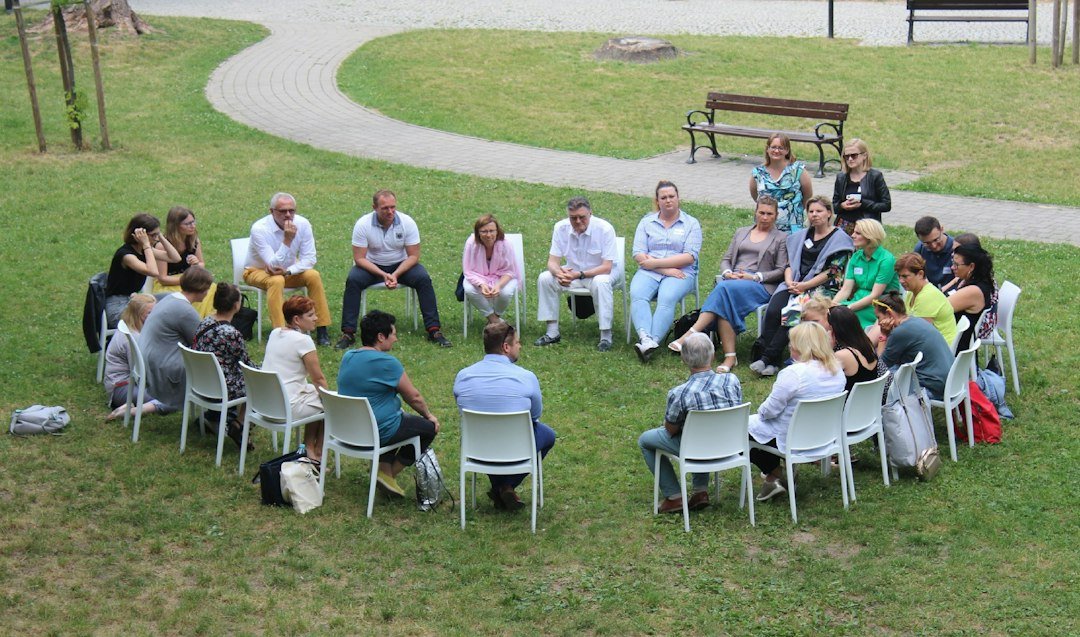
Representatives tested the approach during a 30–31 October workshop at Tsinghua University in Beijing. The scenario modelled rising dengue-like illness associated with a hypothetical Super El Niño. It was a training exercise, not evidence that the described outbreak actually occurred. Participants explored what people might be hearing, which misconceptions needed attention and how communication plans could respond.
Examples cited by WHO
WHO described a Lao PDR dengue-awareness campaign that used behavioural-science methods and humour; it reported a reach equivalent to 68.2% of the country’s Facebook users in 2024 and a rise in the share of respondents very concerned about dengue from 21% to 56%. The figures relate to that campaign, not a controlled estimate of reduced dengue incidence. WHO also described Philippines teams mapping immunisation misinformation to guide outreach.
Practical district and CHC workflow
A district response cell could collect anonymised common questions from OPD, ASHA/ANM outreach and helplines; verify rumours against laboratory and public-health data; develop short local-language answers; and track whether patients understand where to seek care. Publish clear uncertainty statements when evidence is incomplete. Escalate reports of severe illness through existing surveillance channels rather than waiting for social-media confirmation.
Data ethics and evaluation
Any local use should minimise personal data, avoid identifying individual patients, assess linguistic bias and provide human review before public messaging. AI-generated summaries may distort minority voices or amplify false claims. A sensible evaluation would monitor trust, message comprehension, referral uptake and the time taken to correct misinformation, while protecting privacy.
What is not established
WHO has announced a regional rollout and training. It has not established that BRIDGE independently prevents outbreaks or improves clinical outcomes in every setting. Such benefits require prospective evaluation.
Primary source and editorial verification
Read the official source (World Health Organization). Information checked on 2 November 2026. This article is educational and does not replace patient-specific clinical decisions or the latest official corrigenda.